
The Knowledge: Nostalgia, Skill, or Results?
Three or four years to learn a map
Since 1865, anyone who wants to drive a black cab in London has had to pass an examination called The Knowledge. To earn the badge, a candidate must absorb roughly 25,000 streets and the 320 set routes of the Blue Book, everything inside a six-mile radius of Charing Cross, and then recite it on demand, from memory, with no help from any technology. Transport for London says mastering it “typically takes students three to four years.” TfL’s own word for the standard is encyclopedic.
Hold that word. It is going to do a lot of work in this article, and it is not mine — it belongs to the regulator.
If you are old enough, you remember the other side of this. You remember landing somewhere, getting into a taxi, giving an address, and slowly realizing the driver had no idea where it was. The Knowledge exists so that never happens in London. It is one of the most demanding professional standards in the world, and the people who hold it are rightly proud of it.
And it works — this is not a story about a useless tradition
Before I ask the uncomfortable question, let me make the strongest possible case for the thing I am about to question. That order matters. An argument that only survives against a weak version of the other side is not an argument; it is a performance.
In 2000, a team led by Eleanor Maguire scanned London taxi drivers and found something remarkable: their posterior hippocampus — a region associated with spatial memory — was significantly larger than in people who did not drive cabs. Better still, the difference scaled with time on the job. The longer someone had driven, the more pronounced it was. The adult human brain, it turned out, physically reorganizes itself around the demands you place on it.
In 2024, The BMJ published an analysis of roughly nine million deaths across 443 occupations. Among all of them, taxi drivers and ambulance drivers had the lowest share of deaths attributed to Alzheimer’s disease — 1.03% for taxi drivers against a 1.69% average.
Now the honesty that has to travel with that finding, because if I do not say it, the first person who looks it up will. The authors are explicit: “We view these findings not as conclusive, but as hypothesis generating.” It is observational. And the pattern does not appear in bus drivers or pilots, nor with other forms of dementia — which is what makes the spatial-navigation explanation interesting rather than conclusive.
So: The Knowledge produces real mastery, real pride, a real professional identity, and effects you can see on a brain scan. Any argument that treats it as mere obsolete ritual has not been paying attention.
The question a business has to ask anyway
And yet.
Strip away — just for a moment, and only as an exercise — the pride, the identity, the belonging, the craftsmanship. All of it real. All of it valuable. What remains is a question every organization has to be able to answer about every requirement it imposes:
Of those three or four years, how much of it reaches the person who gets into the cab?
Because the passenger, most of the time, simply wants to arrive. And GPS, Waze and Google Maps have been doing that job — well — for years, for free, from a device already in everyone’s pocket.
I want to be careful here, because this is where this kind of argument usually turns cheap. I am not saying the driver is replaceable, or that the craft is worthless, or that a satellite is the equal of a professional. I am saying something narrower and harder to dodge: a three-to-four-year requirement is an investment, and investments get compared to alternatives. That time is money, energy, and years of a human life. It competes against every other thing that person could have learned.
There is a detail in Maguire’s study that I find to be the most honest metaphor in this entire discussion. While the posterior hippocampus grew, the anterior hippocampus shrank. The gain was not free. Something was traded for it.
Every specialization has an opportunity cost. Even biology charges it.
Not scrapping. Rebalancing.
So let me be precise about what I am proposing, because the lazy reading of this argument is “abolish the exam,” and that is not it.
Keep the exam. Keep the standard. Keep the pride. But rebalance it: reduce the weight of the encyclopedic component — the part a satellite now handles — and reinvest that recovered time into what still separates an outstanding driver from a routing algorithm:
- When to ignore the GPS, and why. Judgment about the tool is now a skill in itself.
- Alternate routes for an emergency, for a closed street, for six o’clock on a Friday, for a particular kind of visitor.
- Service, manner, reading a passenger, solving the problem behind the request.
- Fluency with AI for everything memory no longer has to carry.
That is not surrender to technology. It is the best of both worlds: the judgment of the trade, without the dead weight of the part the technology already solved.
Your company has a Knowledge too
Now the part that actually concerns you, because London’s cabbies are not the subject of this article. They are the mirror.
Every organization accumulates requirements the way a hull accumulates barnacles — and almost nobody is assigned the job of scraping them off. The degree that was a proxy for something in 2005. The “five years of experience” that was calibrated to a tool that no longer exists. The certification that made sense when the work was done differently. The onboarding that teaches, at length, a process that was automated two years ago.
This is not a hunch; it is measurable at national scale. The 2015 report from the U.S. Treasury, the Council of Economic Advisers and the Department of Labor found that the share of the American workforce in a state-licensed occupation had risen from less than 5% in the early 1950s to about 25%. Requirements accrete. And when the same report reviewed the evidence on whether that produced better outcomes, it found that “stricter licensing was associated with quality improvements in only 2 out of the 12 studies reviewed.”
To their credit — and I insist on this, because a one-sided reading here would be dishonest — the authors add that these studies “do not indicate that all licensing frameworks fail to increase service quality.” Some requirements earn their keep. The point is not that standards are bad. The point is that almost nobody checks.
The announcement is not the change
Here is where it gets genuinely uncomfortable for those of us who like to think of ourselves as modern.
In recent years a great many companies announced, with considerable fanfare, that they were dropping degree requirements and moving to skills-based hiring. In February 2024, the Burning Glass Institute — with Harvard Business School’s Joseph Fuller among the authors — went and checked what actually happened to hiring afterward.
The finding: “For all its fanfare, the increased opportunity promised by Skills-Based Hiring was borne out in not even 1 in 700 hires last year.”
Roughly 45% of firms changed the job posting and nothing else — the report calls them “In Name Only.” About a fifth actually went backwards over time. Nearly all of the real change came from the 37% that meant it.
Read that next to The Knowledge and the symmetry is uncomfortable. It is easy to say you value skills over credentials. It is easy to rewrite the posting. What is hard — what almost nobody does — is change who you actually hire, and what you actually require, and then measure whether it moved.
The honest counter-argument
Now let me argue against myself, properly, because this is the objection that deserves a real answer.
Requirements are not always nostalgia. Sometimes they carry genuine signal. In 2014, Norcini and colleagues published a study in Academic Medicine linking physicians’ licensing examination scores to their patients’ outcomes across 60,958 hospitalizations. They found each additional point on the exam was associated with a 0.2% decrease in mortality — roughly 4% per standard deviation. That is a credential predicting whether people live.
There is also a resilience argument, and it is not trivial: the driver who knows the city is the one who still functions when the signal drops, the battery dies, or the routing sends everyone into the same jam. Redundancy has value precisely on the day the system fails.
So the conclusion is not “drop your requirements.” It is sharper and more demanding than that:
Can you name the outcome each requirement predicts?
If you can — if you can point to the result it produces for the customer — keep it, and be proud of it. If the only thing it reliably predicts is itself, then what you are protecting is not a standard. It is a memory.
Three columns
Here is the exercise, and it takes an afternoon.
Take one role in your organization. Not the whole company — one role. Put its requirements into three columns:
- Tradition — what you require because you have always required it.
- Result — what you require because it demonstrably produces the outcome the customer pays for.
- What AI now frees — what the tools already handle, or could.
Then do the arithmetic honestly. Everything in the first column is your organization’s own Knowledge: admirable, expensive, and possibly no longer load-bearing. Decide — deliberately, with judgment, not by drift — how much to keep and how much to reinvest.
And apply the same three columns to yourself. Is your professional development plan built for the market you are entering, or for the one that trained you?
Because the customer wants what they always wanted: to arrive. But now they want it faster, better informed, more traceable, more accurate, more personal, and at a better price. AI is currently the shortest path to all six. The time it gives back is not the victory — it is the raw material. What you decide to do with it is the strategy.
The tools change. The talent, and the willingness to keep learning, do not.
Change it — but change it well.
Our Perspectives

The evidence here is unusually good, and it points in two directions at once. Maguire's 2000 PNAS study found London cabbies' posterior hippocampus was larger than controls' and grew with years on the job — but the anterior region was correspondingly smaller. That trade-off is the finding people forget. The 2024 BMJ analysis of roughly nine million deaths across 443 occupations found taxi and ambulance drivers had the lowest share of Alzheimer's deaths, 1.03% against a 1.69% average — though the authors explicitly call it hypothesis generating, not conclusive, and the pattern is absent in bus drivers, pilots, and other dementias. My recommendation is narrow and testable: for each requirement in a job description, ask whether you can name the outcome it predicts. Norcini's 2014 work in Academic Medicine showed licensing exam scores do predict patient mortality — roughly 4% per standard deviation. So requirements can carry real signal. The discipline is knowing which of yours do.

Here is the part that should make every executive uncomfortable. In 2024 the Burning Glass Institute checked what happened after companies loudly dropped degree requirements. The answer: the promised opportunity showed up in not even 1 in 700 hires. About 45% of firms changed the posting and nothing else — 'in name only.' Roughly a fifth actually went backwards. So before anyone lectures London cabbies about clinging to tradition, look at your own hiring data, not your press release. And notice what the 2015 Treasury and Labor report found: the share of the U.S. workforce in a state-licensed occupation went from under 5% in the early 1950s to about 25%, and stricter licensing was associated with quality improvements in only 2 of the 12 studies reviewed. Requirements accumulate because nobody is assigned to remove them. That is not strategy. That is sediment.
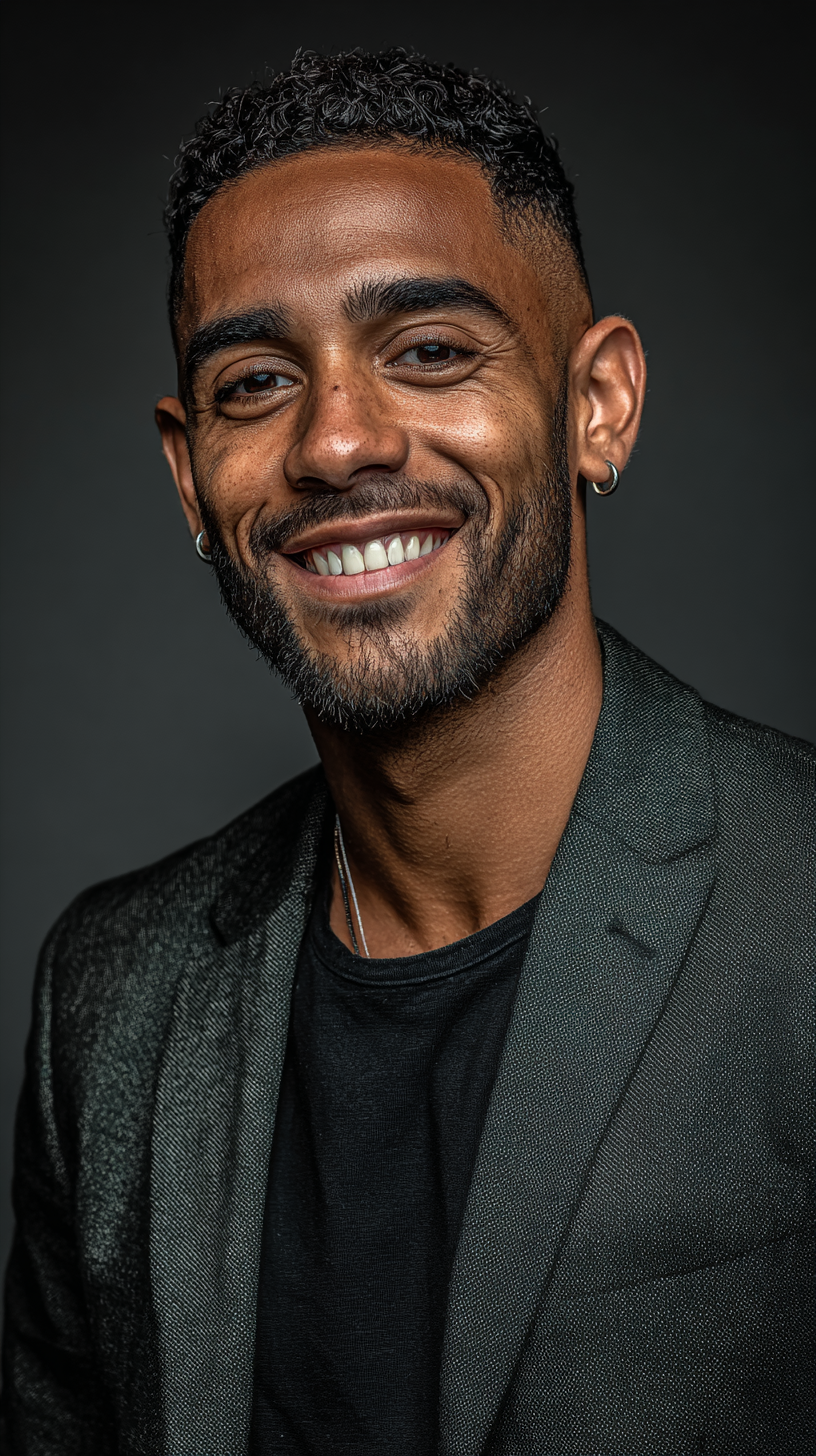
Look at what is actually being freed up here! Three to four years of a human being's life, spent encoding a map that a satellite now delivers for free. I am not mocking the craft — I am doing the arithmetic. Imagine redirecting even half of that into what no GPS can do: reading a nervous tourist, knowing which route survives a closed bridge at 6pm, building a repeat clientele, running a business from a phone. That is the trade every company can make right now. The tools are cheap, they are in your pocket, and the barrier is not technology — it is a job description written in 2006 that nobody has reopened. Pick one role this week. Ask what it requires because it produces results and what it requires because it always has. The gap is your opportunity.

My grandfather was a blacksmith, so celebrated that people rode in from other towns to have him shoe their horses. Then the automobile arrived and transformed his trade. I tell that story often, and here is what it taught me: the tools change, the talent and the willingness to learn do not. The Knowledge deserves genuine respect — it produces mastery, pride, identity, and measurable changes in the human brain. But respect is not the same as exemption. The question is not whether the effort is admirable; it is what portion of it reaches the person who gets into the cab. Even the brain paid a price: the posterior hippocampus grew while the anterior shrank. Every specialization has an opportunity cost. The discipline I would ask of any leader is this — take one role and sort its requirements into three columns: what you demand out of tradition, what the result actually demands, and what AI now frees. Whatever survives in that first column is your own Knowledge. Keep what earns its place, and reinvest the rest. Change it — but change it well.
Sources & References
- Learn the Knowledge of London — Transport for London
TfL requires an 'encyclopedic knowledge of the streets and places of interest' within a six-mile radius of Charing Cross, including the 320 runs of the Blue Book; mastering it 'typically takes students three to four years'
View source - Navigation-related structural change in the hippocampi of taxi drivers — Maguire, Gadian, Johnsrude, Good, Ashburner, Frackowiak & Frith (2000)
PNAS. Posterior hippocampi significantly larger in London taxi drivers than controls; anterior region larger in controls; volume correlated with time spent driving a taxi — positively in the posterior, negatively in the anterior
View source - Alzheimer's disease deaths lowest among taxi and ambulance drivers — The BMJ (2024)
Christmas issue study of ~9 million deaths across 443 occupations (2020–2022): taxi drivers 1.03% of deaths from Alzheimer's vs 1.69% general average. Authors: 'We view these findings not as conclusive, but as hypothesis generating.' Pattern absent in bus drivers and pilots, and in other dementias
View source - Skills-Based Hiring: The Long Road from Pronouncements to Practice — Sigelman, Fuller & Martin — The Burning Glass Institute (2024-02)
'For all its fanfare, the increased opportunity promised by Skills-Based Hiring was borne out in not even 1 in 700 hires last year.' ~45% of firms changed requirements 'in name only'; ~37% ('Leaders') drove nearly all real change; ~one-fifth were 'Backsliders'
View source - Occupational Licensing: A Framework for Policymakers — U.S. Dept. of the Treasury, Council of Economic Advisers & U.S. Dept. of Labor (2015-07)
'About 25 percent of today's U.S. workforce is in an occupation licensed at the State level, up from less than 5 percent in the early 1950s.' 'Stricter licensing was associated with quality improvements in only 2 out of the 12 studies reviewed' — with the caveat that this does 'not indicate that all licensing frameworks fail to increase service quality'
View source - The relationship between licensing examination performance and the outcomes of care by international medical school graduates — Norcini, Boulet, Opalek & Dauphinee (2014)
Academic Medicine 89(8). 60,958 hospitalizations, 2,525 physicians: each additional exam point associated with a 0.2% decrease in mortality; each standard deviation (~20 points) equivalent to a 4% change in mortality risk — evidence that some requirements do carry real signal
View source
AI education should be as intelligent as the technology it teaches. Our program adapts to your role, industry, and experience level to deliver exactly what you need — nothing more, nothing less.
Comments (0)
No comments yet. Be the first to share your thoughts!